Invest in Russia — invest in Russian regions!
All analytics

Life after Greta Tunberg or Consumption in Terms of Global Warming

Research
9 October 2020
Жизнь после Греты Тунберг, или потребление на фоне глобального потепления
Source
,
Release date
08/18/2020

The pandemic has made every fourth resident of Russia think more about environmental issues. However, in order to combat greenhouse emissions, the Russians agree to control only the consumption of electricity and water. Only 12% of our compatriots believe that each person should significantly reduce the consumption of various resources to combat global consumption.

Greta Tunberg is a Swedish environmental activist who has called for the elimination of air travel, hydrocarbons and active consumption. Self-isolation showed what life in the «world of Greta Tunberg» is: during the pandemic, self-isolated people had to reduce consumption.

After the pandemic, the number of Russians who were inclined to give up air travel and private cars did not increase, but, on the contrary, fell significantly. Refusal to mobility during self-isolation was a shock, but not a reason to think about global warming. The Russians did not like living in the «world of Greta Tunberg».

According to the RPORC surveys conducted in early 2020 (before the pandemic), 40% of Russians called warming a swollen and far-fetched problem.

However, in later surveys one in four residents noted that the pandemic made them think about ecology to a greater extent than it used to be. Almost as many people believe that after the pandemic people will start thinking more about the environment. The climate issue is of great concern to Russians, but it is not in the first place.
Anlytics on the topic

All analytics
Research
4 September 2022
Russia's External Climate Challenges Monitoring

This report by the Center for Strategic Research (CSR) deals with issues currently on the climate agenda in Russia and globally.

Research
4 April 2019
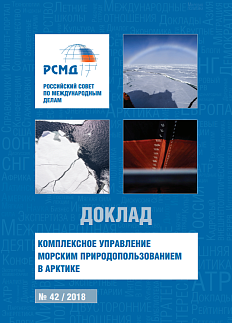
Integrated Marine Management in the Arctic

The report reviews approaches to and mechanisms of marine management in the Arctic Ocean in areas beyond national jurisdiction of the coastal states. The authors conclude that there is a need to develop a special regime for the Arctic based on further build-up of the Arctic Council and the OSPAR experience.


Research
4 May 2021
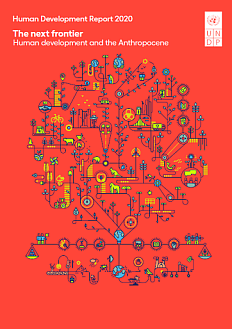
Human development report 2020

The UNDP Annual Report on Human Capital Development in 2020 presents a new perspective on human development in the Anthropocene and offers an adjusted methodology for calculating the Human Development Index.

Research
16 August 2019
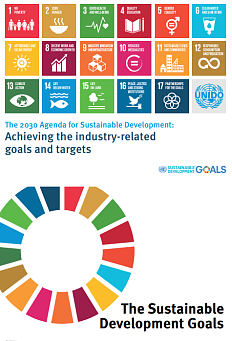
The 2030 Agenda for Sustainable Development: Achieving the industry-related goals and targets

This document summarizes the contribution of UNIDO’s mandate as well as current and planned future activities vis-à-vis the SDGs, with a special focus on SDG-9, which highlights and affirms the critical importance of ISID and its contribution to all 17 goals.