How to do business in Russia if youre not a man
Today, more and more women are successfully opening businesses in the Russian economy simply because they are interested in becoming entrepreneurs. The Eurasian Womens Forum will be held on 1921 September in St. Petersburg. In the meantime, we decided to investigate the progress women have achieved in business on the basis of several success stories.
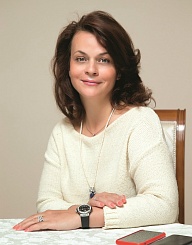
«We have been abandoned and left alone, and I will need your help» said Deputy CEO Anna Tsivileva as she addressed her staff at Kolmar, a coal mining company, in February 2018. The reason for the speech was a change of management: the companys CEO, Tsivilevas husband, was leaving to become Acting Governor of Kemerovo Region.
Kolmar, previously Neryungriugol, now combines underground and openpit mines for the extraction of premium grades of coking coal. The company also has two ore-dressing plants, a power transmission line, a railway line, and a terminal under construction on Muchke Bay in Khabarovsk Territory. Anna Tsivileva owns 70% of the shares. The media wrote that when her husband left the company, he made her a generous gift in the form of shares. However, Tsivileva says, «In fact, mine is not a Cinderella story. We both earned the gift through hard work.»
When her husband became a shareholder in 2012 and started managing, restoring, and expanding the coal company, Anna Tsivileva already had a successful career thanks to her medical and financial education.
The Tsivilevs spent more and more of their evenings discussing the new business. In 2014, when Russia was gripped by the currency crisis, coal prices fell sharply, and production dropped almost twofold. Kolmar was on the verge of bankruptcy.
The hired foreign consultants advice was to flood the unfinished mine in Neryungri and write off the costs. «We had a choice: to say goodbye to the company or to mobilize and start doing something», said Anna. «We chose the second option although Kolmar didnt even have the money to pay wages back then and the general director had to forego a salary for the first year.»
At the same time, the company was faced with the need to finish building a mine, since underground mining is a more reliable method for extracting coal of stable quality. As Anna explains, «In addition, we took the decision to build three coal beneficiation plants so that we could produce concentrate, which is much more valuable than unbeneficiated coking coal.»
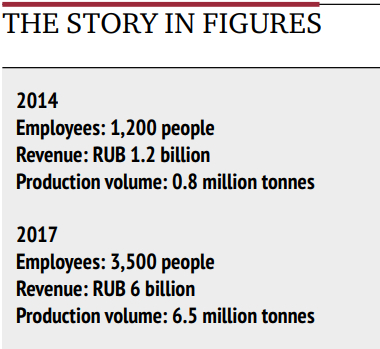 The first enrichment plant, Ignalina-1, with a production capacity of 2 million tonnes, was launched in May 2016. The second enrichment plant, Denisovka, with a production capacity of 6 million tonnes, was erected by May 2018.
Anna continues: «We realized that our coal was superior to Australian coal in a number of respects, so I focused on finding clients in the Asia-Pacific region. There were a lot of demanding business trips. My colleagues and I flew to Japan, and just a day later we went on to South Korea. The next stop was Vietnam. We were constantly changing time zones. Sometimes I couldnt even remember what country I was in when I woke up.»
Today, 70% of the coal that the company extracts and processes is exported, primarily to China, Japan, South Korea, and Vietnam. It takes coal five to seven days to travel by rail and two to three days to be shipped by sea to countries in the Asia-Pacific region. That is, it reaches buyers ports in literally 10 days. Tsivileva adds: «This is a very short supply chain, which means we can ship both large and small lots of coal. The latter can be very convenient for small factories. This kind of flexible approach gives us an advantage over the Australian coal miners, who are forced to contend with greater distances and so need to use larger ships.»
Over the four years, Kolmars coal reserves increased from 385.5 million tonnes to 1.1 billion tonnes. Anna changed the senior management team four times.
Anna herself got so used to the new job in the Far East over the four-year period that she fell in love with those places. She is planning to develop local tourism and a separate department will be created at Kolmar specifically for this purpose. She and her husband and three children are already spending their second summer holiday in Yakutia. When friends ask why, she simply shows them pictures of the beautiful sights to be found in the region, which immediately bring an end to the questions.
Text: Yulia DUDKINA, Laboratoriya Odnazhdy, especially for the EEF magazine