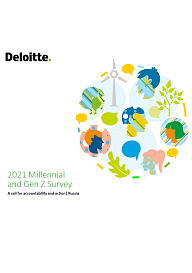
Deloitte experts surveyed respondents from Gen Z and millennials in Russia about current trends and global challenges. The survey assesses the results against answers of these generations representatives worldwide.
The Roscongress Foundation presents the salient points of the publication accompanied by fragments of broadcasts of relevant panel discussions from the business programme of international events held by the Roscongress Foundation.
Stress levels among millennials and Gen Z are on the rise.
Almost half of Gen Z and 40% of millennials in the world said they are stressed all or most of the time. These figures are comparable to those for Russia — 39% and 31%, respectively. High levels of stress are due to respondents’ concerns about finances, family well-being and employment prospects. About two-thirds of respondents agreed that they often worry about their personal financial situation. Family well-being has also become a major cause of millennials’ stress, both in Russia and globally. Uncertainty about job/career prospects was a major cause of stress for Gen Z.
Stress and anxiety are prevalent in the workplace, and employers’ efforts to support employees’ psychological health were viewed negatively by respondents. About a third of respondents (31% of millennials, 35% of Gen Z) said they had taken time off work because of the stress caused by the pandemic. However, about 40% did not feel comfortable disclosing the reason for taking leave to their employer. Some 40% of millennials and Gen Z respondents felt their employers did a poor job in supporting their psychological well-being during the pandemic. Also, less than half of millennials (47%) and Gen Z (48%) believe that business has a positive impact on society.
The environment remains a major concern for both generations in the world.
Even though health care and unemployment topped the list of concerns for millennials during the pandemic, the environment was still a priority (No. 3 for millennials and No. 1 for Gen Z). 40% believe that more people will commit themselves to environmental issues after the pandemic. But 60% fear that business efforts to tackle climate change will be a lower priority, as businesses have to deal with the challenges posed by the pandemic.
It is worth noting that in Russia, the most significant generational issues are unequal income distribution (for 41% of millennials) and corruption in business and politics (for 47% of Gen Z). At the same time, 20% of the respondents felt that the pandemic had had a positive effect on people in the area of environmental issues and the willingness to take their own actions to solve environmental problems, and they themselves were prepared to take more active measures.
Video: https://roscongress.org/sessions/spief-2021-zelenaya-subbota-den-ekologii/search/#00:15:55.391
Respondents note the spread of racism and inequality in income distribution.
Two-thirds of millennials (69%) and Gen Z (66%) in the world believe that wealth and income are unequally distributed. This figure exceeds 80% for both groups in Russia. Many of them believe that government intervention and appropriate legislation will be needed to stimulate change. Almost a third supported politicians who want to reduce income inequality. Approximately 60% said legislation to limit the pay gap between senior managers and employees would help considerably, as would a requirement for acceptable wages.
Millennials and Gen Z believe that discrimination is widespread due to systemic racism. Every fifth respondent feels personally discriminated against constantly or frequently because of some aspect of their background. Six in ten Gen Z and 56% of millennials globally said that systemic racism was widespread in society as a whole. It should be noted that this figure is lower for Russia.
Respondents believe that individuals and activists are doing everything they can to reduce systemic racism, while the education system, legal system, government and businesses lack the capacity to stimulate change.
For more information, see the special sections of the Roscongress Foundation Information and Analytical System: COVID-19 , dedicated to pandemic and its impact on different areas of society; Environment, which deals with ecological issues; and FriendsforLeadership, Quality of Life and Social Business, which focus on youth and social initiatives.