This report by AppDynamics, a market leader in application performance management, examines the unprecedented pressures that technologists are experiencing as a result of COVID-19 and explores the challenges that IT departments must overcome. Also, the report reveals key drivers of successful digital transformation in the current conditions. The study is based on a survey of IT professionals in 10 countries, including Russia.
The Roscongress Foundation presents the salient points of the publication accompanied by fragments of broadcasts of relevant panel discussions from the business programme of international events held by the Roscongress Foundation.
The COVID-19 pandemic is an unprecedented challenge for technology departments.
The COVID-19 pandemic is impacting businesses, especially their technology departments, across the globe in an unprecedented way. Technologists find themselves spearheading their organizations response to the biggest global economic crisis for generations and, in many cases, with the immediate survival of their businesses resting on their shoulders.
The results of the survey show that during the pandemic technology priorities changed within 95% of organizations. 81% of technologists state that COVID-19 has created the biggest technology pressure for their organization that they have ever experienced.
The research finds that technologists are experiencing pressures from all sides, accelerating digital transformation projects, mobilizing huge sections of the workforce to operate from home, while at the same time needing to manage their network and maintain security throughout the technology stack. Almost two thirds (64%) of technologists state that they are now being asked to perform tasks and activities they have never done before.
Importantly, technologists are being asked to deliver major transformation projects in previously unthinkable time frames. 71% point to digital transformation projects that have been implemented within weeks rather than the months or years it would have taken before the pandemic.
Successful digital transformation requires initiative, flexible environment, and appropriate tools.
The report praises Agents of Transformation, meaning elite technologists who are driving successful digital transformation. These specialists possess all the personal skills and attributes needed to drive innovation, and they operate within organizations that have the right culture, leadership and tools in place to enable successful digital and business transformation.
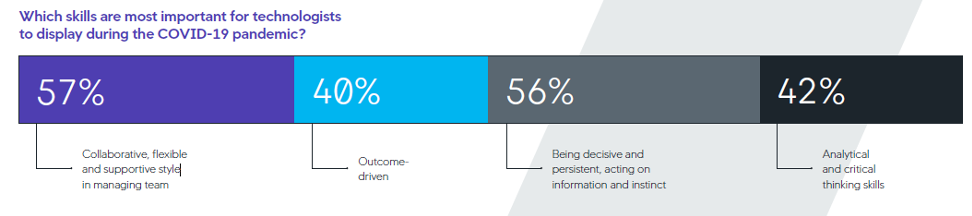
Agents of Transformation are described as collaborative, flexible, and outcome-driven professionals with supportive style in managing team. They need to be decisive and persistent, acting on information and instinct, and must possess analytical and critical thinking skills.
Other key factors in becoming an elite technologist include having autonomy and accountability, real time data at the point of need, and access to stakeholders within the business.
Advanced technologies, being key to business recovery and future development, are transforming traditional business practices.
The vast majority of respondents (87%) believe they can positively impact how their business responds to and then recovers from the effects of the COVID-19 pandemic. The AppDynamics analysts believe that the impact of COVID-19 will be long lasting as organizations will recognize the benefits of new technologies and will adopt more agile approaches to all areas of their environment, from internal communications to customer relations.
At the same time, technologists predict that there will be more focus on application security and disaster recovery in their organizations following the pandemic, alongside increased investment in technology that monitors the digital customer experience, and in training and developing technologists themselves.
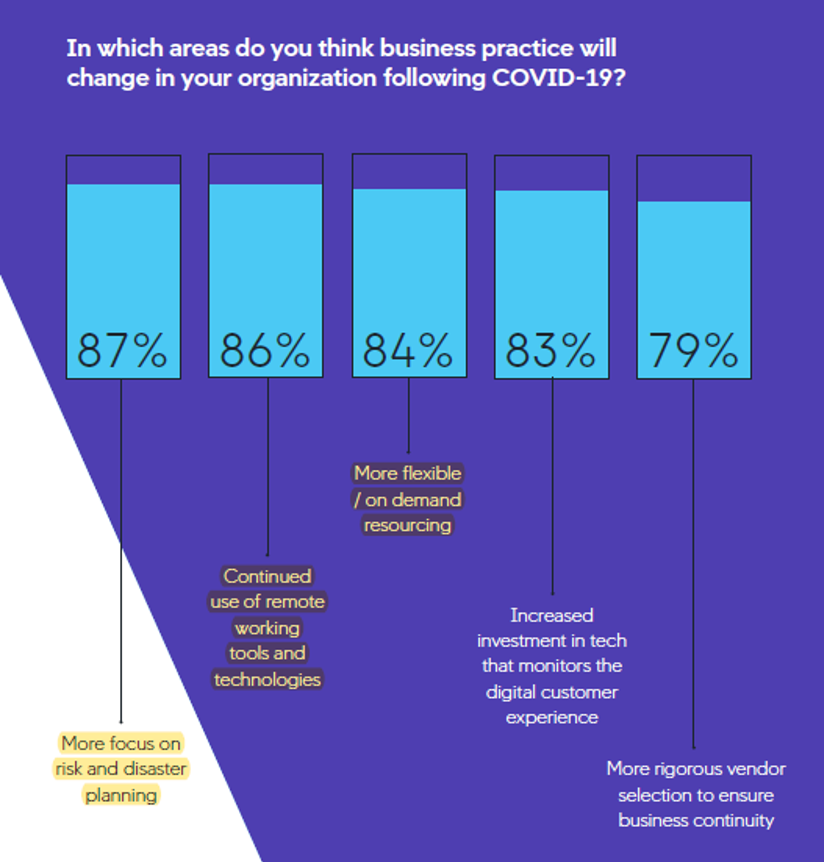
Respondents think that future changes in business practice will probably include more focus on risk and disaster planning, continued use of remote working tools and technologies, more flexible resourcing, increased investment in technology that monitors the digital customer experience, and more rigorous vendor selection.
For more information about possible ways to stabilize the economy during a pandemic, please see the StayHomeEconomy special section of the Roscongress information and analytical system, and the Entrepreneurship, IT industry, and Digitalization sections about digital technologies based on innovation.