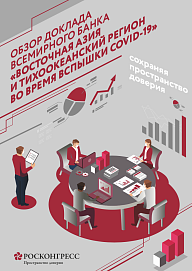
Early in April the Managing Director of the International Monetary Fund Kristalina Georgieva announced that the global economy has stopped due to the COVID—19 coronavirus pandemic. According to Georgieva, there has never been such a rise in the number of requests for emergency help in the history of the IMF: over 90 countries have applied for emergency support. The head of the IMF described the global economy recession as worse than the crisis of 2008-2009.
«The COVID-19 pandemic is truly a global crisis of a magnitude we have not seen in our lifetimes and it will impact our health, economies, and businesses in ways that are mutually reinforcing and potentially long lasting. There is a very clear rationale for the state to support families as well as businesses to mitigate the impact of the crisis on jobs and livelihoods and reduce its long-term consequences. Many countries, including Russia, have announced stimulus packages that contain measures to strengthen safety nets for people, ensure liquidity in the financial sector, and help businesses survive the downturn. These are all appropriate actions to take in the face of this crisis,» commented the World Bank Country Director for the Russian Federation Renaud Seligmann.
He also noted that in providing support, a state should adhere to certain principles.
First, support to business should be as non-distortionary as possible and focus on immediate liquidity challenges, reducing layoffs, and avoiding bankruptcies. According to Seligmann, these measures should be targeted and limited to businesses that were viable before the crisis, as opposed to those that are best positioned to lobby for support.
Secondly, sequencing matters. Broad based fiscal stimulus measures to prime the pump of demand in the economy will not be effective until containment measures are eased, and people start returning to work.
Finally, support measures should be designed to reach all businesses including MSMEs (micro, small and medium enterprises) and others that may not have access to the technologies and institutions that most support programs depend on, believes Renaud Seligmann.
You can find the full text of the material here.