
The main feature of digitization in retail is that despite a rapid growth of e-commerce, brick-and-mortar stores still remain the prime shopping channel.
The share of e-commerce sales in total retail sales volume is the largest in China (35%). To compare, e-commerce sales in the US in 2018 accounted for around 10% of retail sales. Russian e-commerce sales currently account for 4% of total retail sales, but this figure is expected to reach 6% by 2023. Despite the forecast growth in e-sales, physical stores will continue working. Global leading digital retailers, such as Amazon and AliExpress, focus on integrating the customers offline shopping experience into their digital ecosystems.
The most active online audience is the younger generation. 71% of millennials shop online at least once a month, 27% shop less at other retailers because of online shopping experience. Social media have a strong influence on shopping behavior. 52% of consumers believe that social media influenced their purchase decisions. 39% have been influenced to buy a product or service, following positive reviews on social media.
To meet consumer demands, traditional in-store retailers create new formats, such as Concept Store (Panasonic, Catcher), Showroom (Leroy Merlin, IKEA), Pop-up Store (Tom Tailor, Aizel).
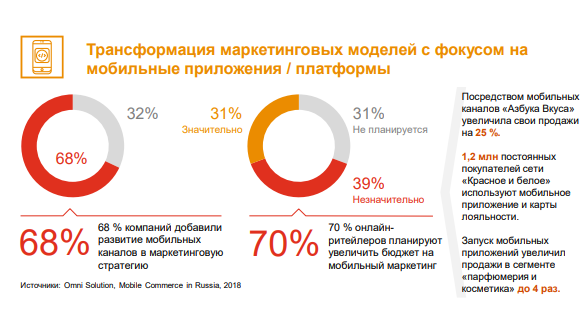
There has also been a shift in marketing models the focus now is on the mobile apps/platforms channel. There is a rapid growth of pick-up and locker delivery in Russia. Based on research showing that consumers spend up to 80% of their leisure time using online entertainment platforms, retailers start using such platforms to satisfy the customers demands.
PwC experts suggest five universal ways to adapt businesses to the changing environment:
1. Use data to anticipate customer needs before they even arise then create an individual experience.
2. Personalize products and embed them in services that wow the customer.
3. Leverage technologies to increase efficiency and flexibility of operations.
4. Intensify collaboration and partnering, empower decision makers and embrace launching and learning.
5. Empower staff with the technologies to be excellent at their job and build new, digital capabilities.
The authors emphasize that all these strategies must be pursued simultaneously, while the transformation should be business-driven and technology-enabled.