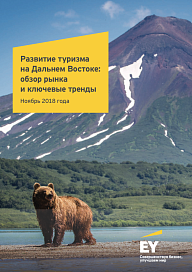
Over the last three years, the number of domestic and inbound tourists in the Russian Far East has grown by 71.5% reaching a record-high 5.4 million in 2017. Compared to 2015, the number of Russian citizens coming to the Far East has increased by 77%. The number of foreign tourists has grown by 42.5% over the same period. The total number of tourists in the Far East reached a record-high 5.4 million in 2017. The most popular destinations are Primorsky Krai (76%), Khabarovsk Krai (11%), and the Sakhalin Oblast (5%). In the past year, they hosted over 4.8 Russian and foreign tourists. Among the factors that lower the attractiveness of the region, the participants of the survey named poorly developed infrastructure (lack of quality hotels, bad condition of approach roads to places of interest, limited capacities of airports and sea ports) and the climatic conditions which shorten the tourist season. Language barrier is an additional deterrent for foreign tourists.
The results of the survey show that both Russian and foreign tourists mostly come to the Far East to see places of historic and cultural interest (34%). Another 22% of guests want to take part in outdoor activities (alpine skiing, jeeping, yachting, diving, hiking, etc.). An increasing number of people (20%) are interested in the region’s unique natural attractions — seas, rivers, volcanoes, beaches, national parks. Thus, foreign tourists come to the Far East for educational travel, adventure travel, and eco-tourism.
The Government of Russia is planning to allocate around 7.8 billion rubles for the development of tourist clusters in the Far East. The Development of Domestic and Inbound Tourism in the Russian Federation (2019–2025) program stipulates for creating consolidated investment projects in the cruise travel segment, namely Amur (Khabarovsk Krai, Amur Oblast, Jewish Autonomous Oblast), Primorye (Primorsky Krai), and Kamchatka — Sakhalin (Kamchatsky Krai and Sakhalin Oblast).
Creating a tourist cluster named Russian Arctic (Republic of Sakha (Yakutia)) and another two clusters in Komsomolsk-on-Amur and on the Russky Island (Primorsky Krai) is scheduled for the beginning of 2019. As part of the mechanism for investor support in the Far East, 91 projects in the tourism sector have been launched with a total investment volume of 43.8 billion rubles. In the optimistic scenario, the program for the development of tourism in Russia up to 2025 projects a growth of up to 20% in the number of tourists coming to the Far East. Even now, the participants of the survey speak about a positive impact of the state support measures. For example, they note an increase in the number of tourists coming to Vladovostok, Kamchatka, and Yuzhno-Sakhalinsk in 2017 and 2018.
A number of planned projects, including the construction of the Blagoveshchensk — Heihe Bridge and the project for the development of Bolshoy Ussuriysky Island, also have a great potential for the development of tourism in the Far East.