Invest in Russia — invest in Russian regions!
All analytics

Financial stability in Kazakhstan has reached its pre-crisis level

Research
23 November 2018
Финансовая стабильность в Казахстане достигла докризисного уровня
Source
Release date
08/21/2018
Open PDF

The experts from the Analytical Credit Rating Agency (ACRA) assess the financial market of Kazakhstan using their own index named ACRA SFSI KZ (Structural Financial Stress Index for Kazakhstan). This index measures financial stability of the country and assesses its vulnerability to specific risks by aggregating information regarding maturities and currency profile of assets and liabilities of economic agents (financial companies, non-financial companies, population, and state). Like in many other oil-exporting countries, in Kazakhstan the currency risk is stronger than the interest rate risk, and the level of financial system stress depends on the FX rate volatility rather than the spread of interest rates.

In early 2018, ACRA SFSI KZ continued sliding and reached 0.52 pts by the end of 1Q2018. The index is now very close to its pre-crisis level: in 2010–2013, its value was equal to zero. The growth of financial stability in the first half of 2018 was due to, first, an absence of tenge exchange rate fluctuations and a low interest rate spread, and second, due to divergent trends in the currency and liquidity imbalance.


Currency imbalance in the country’s economy has shrunk, mainly because it has decreased in the financial sector. Conversely, the liquidity imbalance has increased, primarily due to its growth in the non-financial sector. According to ACRA analysts, in the second half of 2018, possible risks for the financial system of Kazakhstan include a growing demand for foreign currency and an increasing imbalance in the economy, while the liquidity imbalance isn’t expected to change much, provided that there are no considerable external shocks.
Anlytics on the topic

All analytics
Research
28 May 2021
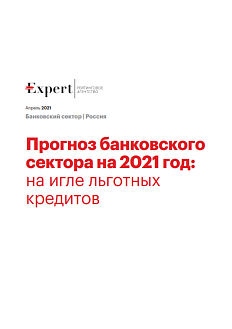
Forecast of the banking sector for 2021: on the needle of concessional loans

The study of the credit rating agency «Expert RA» examines the results of 2020 for the Russian banking sector and gives a forecast for 2021, including in relation to lending to the population and companies and the profit of the industry as a whole.

Research
30 August 2019
Far East Federal District - long-term debt financing needed

In anticipation of the Eastern Economic Forum — 2019, ACRA and Roscongress Foundation has come up with a research on possible sources of financing for the regions of the Far Eastern Federal District.


Research
27 April 2020
Finance leaders respond to the latest developments of COVID-19

PwC is tracking sentiment and priorities about the COVID-19 outbreak among finance leaders.

Research
26 March 2018
Proposals for Russia’s Migration Strategy through 2035

The report titled Proposals for Russia’s Migration Strategy through 2035 has been prepared by the order from the Centre for Strategic Research. The period that followed the disintegration of the Soviet Union proved to be challenging
for Russia from the perspective of politics, socioeconomics, demographics and migration. The unfavourable demographic trends and the declining and ageing of the population
were partially offset by an influx of temporary and permanent migrants from
other post-Soviet states. But numerous errors in the migration policy led to a decrease in Russia’s migration attractiveness, turning migration into a source of social tension and an instrument of political infighting.