The RANEPA analytical note assesses short-term and possible long-term consequences of the pandemic impact on spatial development trends, changes in citizens’ demands for forms of satisfying housing needs and requirements to the urban habitat. Experts note that the likelihood of changing population’s requirements for housing and the urban habitat characteristics, taking into account COVID-19 lessons and self-isolation experience, is quite high. Shifts in internal migration vector are possible: an increase in agglomerations reverse flow, especially to southern regions with a more favorable climate.
Roscongress Foundation analysts highlighted the main theses of this research, accompanying each of them with suitable fragments of video broadcasts of panel discussions held as part of business programs of the key events hosted by the Foundation.
Before the pandemic, one of the key trends in Russia’s spatial development was the concentration of economic growth in a limited number of centers and an increase in the socio-economic role of cities.
According to the strategy of spatial development of the Russian Federation for the period up to 2025, 20 agglomerations are classified as promising large centers of economic growth at the national level, each of which should contribute more than 1% to the country’s economic growth annually.
However, the COVID-19 pandemic has demonstrated the existence of serious risks to the Russian settlement and territorial economy organization system sustainability, which were not taken into account when developing the current state policy in the field of spatial development.
The response to the pandemic in form of «flight» from large cities, which was observed in the spring of 2020 in Russia, forces one to take a critical attitude towards the rate on stimulating agglomeration processes in the state policy of spatial development.
The COVID-19 pandemic has demonstrated risks for the Russian existing settlement and urban development system. The spread of infection in the short term provoked a population outflow from the largest cities to suburbs, medium and small cities and also to the countryside. In the public consciousness, the value of living or having a «reserve» housing in areas with a relatively lower population density has grown.
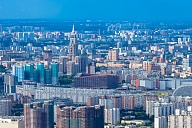
RANEPA experts examine the pandemic impact on the settlement system using the example of the Moscow agglomeration, the largest in Russia. Moscow, as the country’s main entry transport hub, has become the coronavirus spread epicenter. This caused a massive outflow of both internal labor migrants to Russian regions and Muscovites — mainly to suburbs and dachas located in Moscow Region and neighboring regions.
Taking COVID-19 lessons into account, improving state and municipal management of urban development in Russia should include support for individual housing construction, urban planning regulation tools for high-rise buildings, a housing modernization program with an incomplete set of utilities, and individual renovation strategies for cities.
Anti-crisis measures in the field of urban development were focused on supporting the construction industry. For a more balanced spatial development, taking COVID-19 lessons into account, the authors of the study propose to supplement the anti-crisis package with the following measures:
1. Comprehensive support for individual housing construction. Restrictions on mobility of citizens during the pandemic have demonstrated a critical importance of having basic life-support and social functions within walking distance from places of residence.
2. Buildings height limiting using tools of urban planning regulation. An increase in residential areas development height reduces habitat comfort and leads to problems with transport infrastructure overloading.
3. Housing stock modernization with an incomplete set of utilities. Unlike a construction of new housing and a resettlement of dilapidated ones, in the country there are no programs to provide homes with necessary accommodation.
4. Extension of the renovation program, adapted to local conditions, throughout the country. Cities need individual renovation strategies. It is advisable to select cities with negative demographic dynamics as pilot.
Video: https://roscongress.org/sessions/sbalansirovannoe-regionalnoe-razvitie/search/#00:19:33.247
See other materials, placed in special sections of the Information and Analytical System RoskongressStayHomeEconomy, Construction, Regional policy, infrastructure development, and Comfortable environment for living, dedicated to possible ways to stabilize the economy in the pandemic, as well as measures aimed at business and population support, including anti-crisis measures in the field of urban development and ensuring a comfortable life for citizens.