




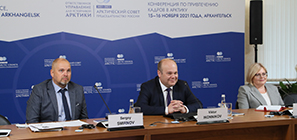
Summary session «Personnel for Investment Projects in the Arctic» within the framework of the Arctic Talent Acquisition Conference, which took place on November 15-16, 2021 in Arkhangelsk.
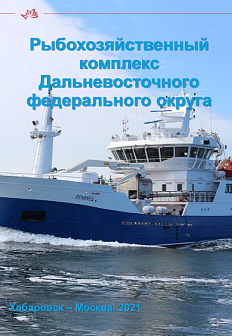
The publication by the Federal Autonomous Scientific Institution «Eastern State Planning Center» (FANU Vostokgosplan) contains detailed information about the state of the fishing industry in the Russian Far East in 2021.
The report prepared by the Russian Foreign Trade Academy in collaboration with the Russian APEC Study Center analyzes main trends in the development of the Asia-Pacific region, interactions of Russia and the EAEU with the APAC countries, prospects for growth in trade and investment, and the regional agreements.
This report provides an outline of UNIDO’s current approaches towards sustainable development, highlighting the role of sustainable energy solutions and environmentally sound technologies in industry, and gives an overview of selected case studies from the region.