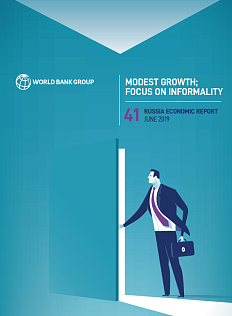
The report begins with a review of global economy in 2018. The World Bank analysts note that a weakening recovery in trade and manufacturing activities is weighing down global growth. A significant appreciation of the U.S. dollar in 2018 has contributed to significant depreciations and capital outflows in many EMDEs. On the global oil market which is strategically important for Russia increased production by main oil-producing countries is causing concerns that a supply shortfall might be followed by an oversupply. Notably, oil prices have risen in 2018 and remain volatile.
Analyzing the economic situation in Russia, the authors acknowledge that growth momentum in Russia increased in the first half of 2018, supported by robust global growth, rising oil prices and a macro policy framework that had promoted stability. However, growth slowed down in the third quarter of 2018 due to a weaker harvest, sluggish performances in manufacturing, etc. Like in most emerging markets, net capital outflows have increased, mainly driven by the sell-off of OFZ bonds and slump in incoming FDI. The Russian banking sector is relatively weak but remains stable. However, concentration and public dominance in the banking sector have increased even further. In the budget system, the funding of the «May Decree» goals put an impetus on revenue mobilization but increased fiscal risks. However, there is room to mobilize additional revenues.
Russias medium-term economic growth prospects remain modest, forecast by the World Bank economists at 1.5% to 1.8% for 20182020. Between 2014 and 2017, Russias non-energy export volume growth has been outpacing that of energy and contributing to export diversification. Yet Russias progress in export diversification is limited. However, measures that rein in macroeconomic volatility (such as flexible exchange rates and a renewed fiscal rule), together with improvements and achievements in human capital and infrastructure, will directly contribute to diversified growth.
.png)
An important element for inclusive and diversified economic growth is strong micro fundamentals. In 2018, Russia continued its efforts to enhance the regulatory environment for SMEs. On the whole, as the World Bank economists believe, the trinity of maintaining stability, doubling growth, and halving poverty can be completed. This will require measures to navigate an increasingly uncertain external environment, mobilize additional revenues, implement reforms that increase inward migration, boost investment, promote competition and develop human capital.
.png)