According to the authors of the report, human-induced planetary change is so great that we can agree with those scientists who state we are entering a new geological epoch: the Anthropocene. These planetary changes are interrelated and are mostly negative, but its getting increasingly clear that human well-being and development depend on the health of natural systems, so we cant continue to exploit natural resources without facing the consequences. Overexploitation or unsustainable agricultural activity, pollution and disturbance of natural systems are beginning to have an effect at an ecosystem, species and even genetic level.
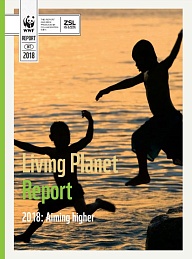
To assess the health of our planet, WWF uses two specially designed indices. The Living Planet Index (LPI) measures the population abundance of mammals, birds, fish, reptiles, and amphibians. The Index was first published in 1998, and for two decades scientists have tracked the average rate of change over time across a set of species populations. Based on the data, WWF experts have come to a grim conclusion that biodiversity is rapidly disappearing. The report shows an overall decline of 60% in population sizes between 1970 and 2014.
.png)
.png)
The second indicator of our planets health is the Ecological Footprint Index. It shows that human consumption of natural resources exceeds biocapacity (the ability of natural systems to renew themselves) by a factor of 1.5. This situation has lasted for over 40 years.
To overcome the growing ecological threats and reverse the global biodiversity decline, the authors put forward a roadmap for 2020 to 2050. This roadmap is based on an article published on 14 September 2018 in Nature Sustainability and titled «Aiming Higher bending the curve of biodiversity loss». The authors suggest three steps: (1) clearly specify the goal for biodiversity recovery, (2) develop a set of measurable and relevant indicators of progress, and (3) agree a suite of actions. These measures will help achieve the ultimate target bend the curve of biodiversity loss, put a stop to the degradation of ecosystems by 2030, and, generally, start a positive trend.